
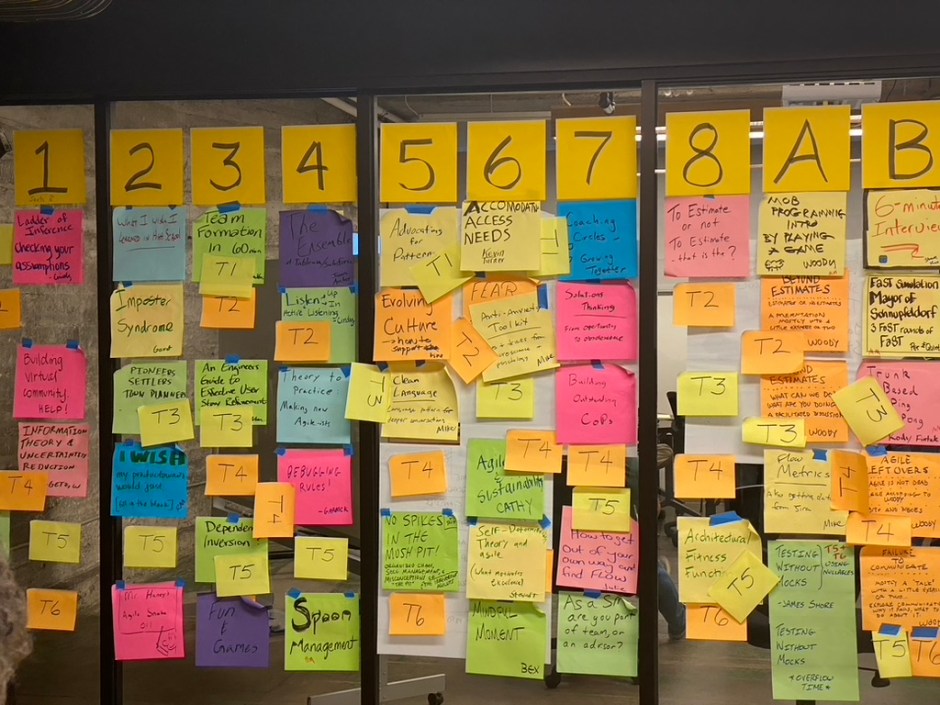
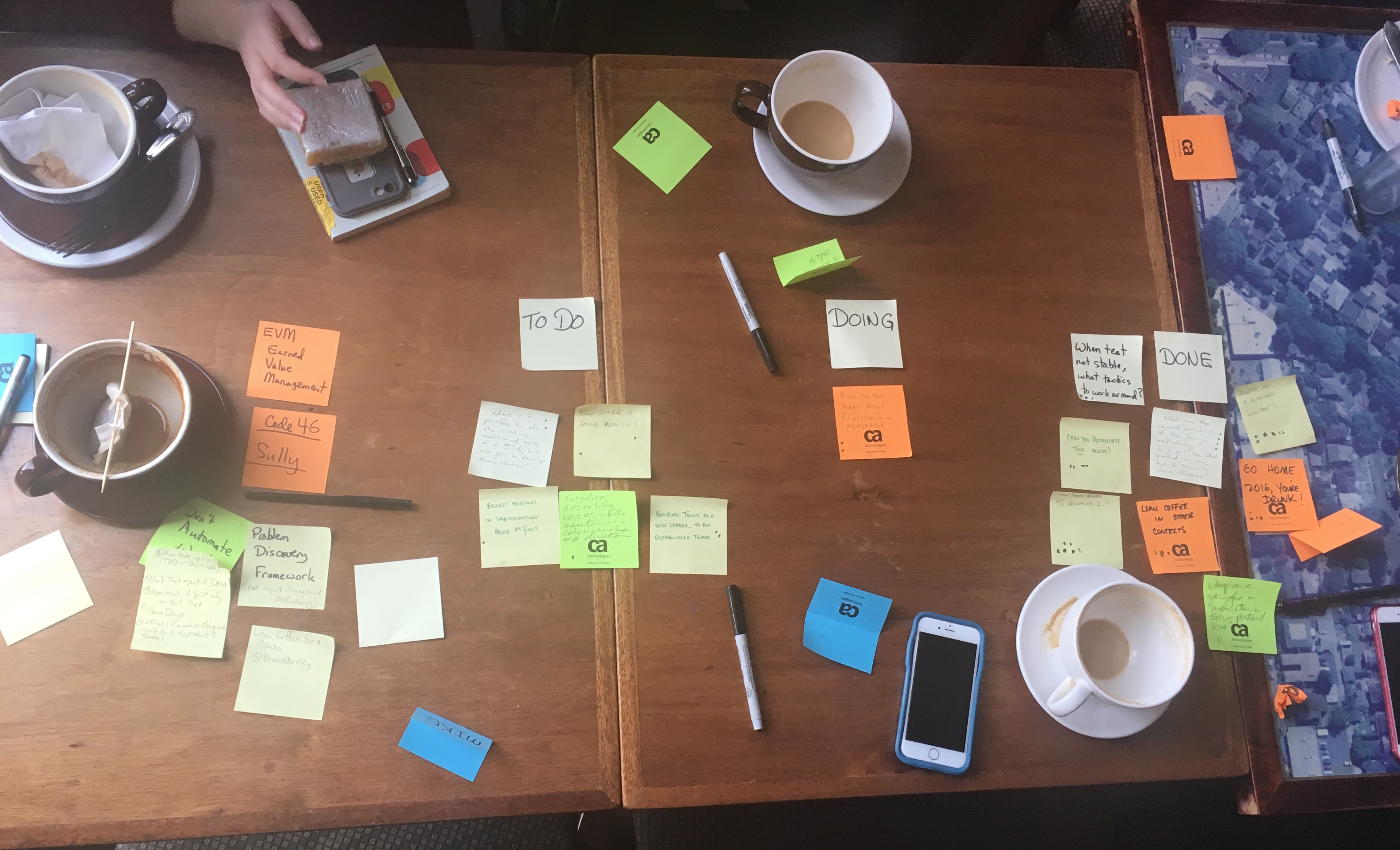
Agile Open Northwest 2024, late March, dawn of Spring in Portland Oregon – and rebirth of the PNW agile community.
Overall Tone: relief & excitement (“we’re back in person! Love the energy in the room”) tinged by a lingering sense of loss (“what’s next for Agilists, if we’ve reached Peak Agile?”)
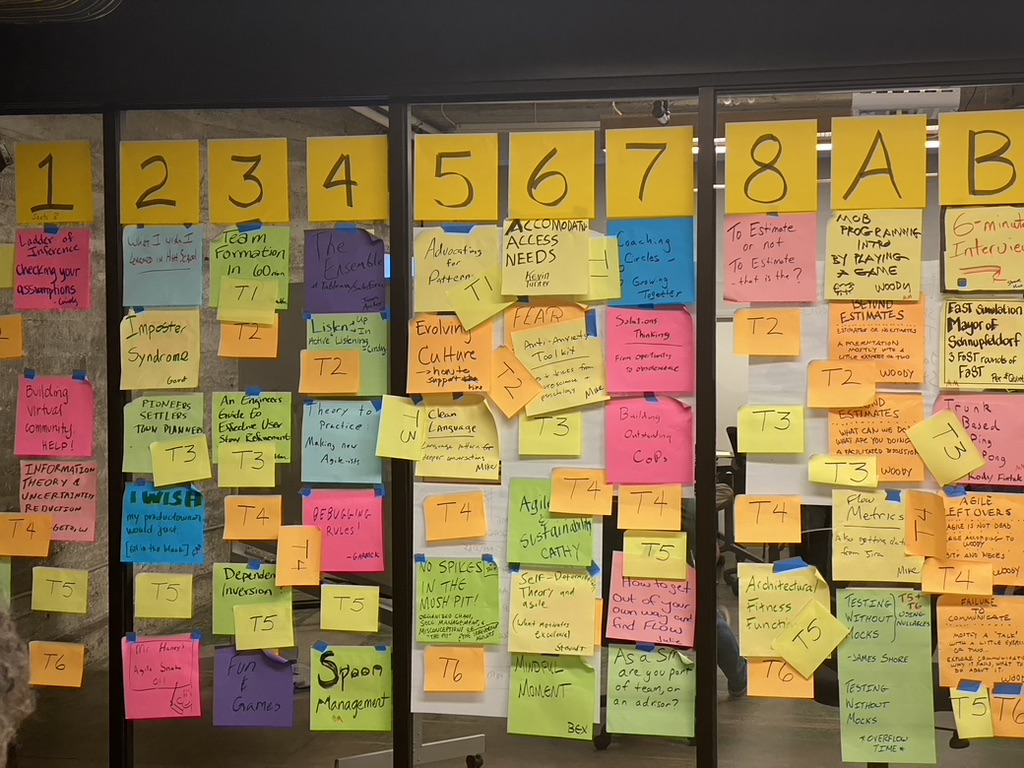
We’ve peaked Agile
- many coaches and Scrum Masters are “taking Agile off their resumes”
- the market for professional coaching has suddenly bottomed out in the last six months
- wondering what name or framework the Agile Principles & Values will reboot under
We’re starved for human contact
- AONW hasn’t met in person for years
- The momentum in this AONW conference community, and our Meetups and tribes, is definitely lower than pre-pandemic
- We’re looking to rebuild a sense and a place of community, where we can gather and have those “hallway conversations” that literally spawned the Open Space movement https://en.m.wikipedia.org/wiki/Open_space_technology
The PNW Agile community is still mostly in hibernation
- Attendees were down by 2/3 from pre-pandemic attendance
- Much of our in-person Meetup gatherings are sparser, the venues less available, and the topics not nearly as elucidating (more mechanical than transformational)
My mentor and friend Ray remarked (something along the lines of), “I haven’t seen you in action since your baby PO days”. I took it as a high compliment – that compared to my days as someone who’d just been CSPO certified and had no experience outside of the Intel bubble, my fluency in the art and humility of Product Management is notable.
What did I talk about?
I facilitated two sessions this year: “Yell At a Product Manager” and “Teach Me Non-Violent Communication 201”.
Yell at a Product Manager
My first session, “Yell at a Product Manager”, I framed as an opportunity for Agilists to explore state of the art in Product Management, how that differs from Product Owners, and whether the PO (or PM) role have a future under our AI overlords. We had a rousing discussion on:
- A definition of PO vs PM – PO more “tactical/short-term/eng-team-focused”, PM more “strategic/longer-term, outward-focused”, though the division of responsibilities varies in every org that has one or both
- good and dysfunctional behaviours of Product Owners & Product Managers and the organisations that employ them – focus on “why” not how, taking accountability for the business outcomes without necessarily having to own and perform all or any of the work leading up to that outcome, and reinforcing customer need always at the forefront of the design/development/validation/launch
- The prevailing attitudes in tech these days – “PM” has passed its peak (I wish AI could figure out what customers need, based on what customers tell us the solution looks like), PO is always perceived as lesser-than (not in my experience – disciplined execution doesn’t just happen with hands-free PRDs-over-the-wall), these two roles should be consolidated, no one person can be good at all three dozen domains in the Pragmatic Framework, and in certain organizations the PM organization is becoming subservient to Engineering or even “eliminated” entirely (but not really https://melissaperri.com/blog/2023/7/7/are-we-getting-rid-of-product-managers)

Teaching Mike Non-Violent Communication
My second session was an act of vulnerability: admitting to this esteemed group that I’ve never learned about NVC (Nonviolent Communication), despite hearing this community advocate for it every chance they get. You ever have that feeling that you’re ignoring a fundamental paradigm at your peril?
So I volunteered to be the dumb catalyst for a group discussion to teach each other.
An incredible amount of insight was dump trucked in the circle in the space of a half-hour:
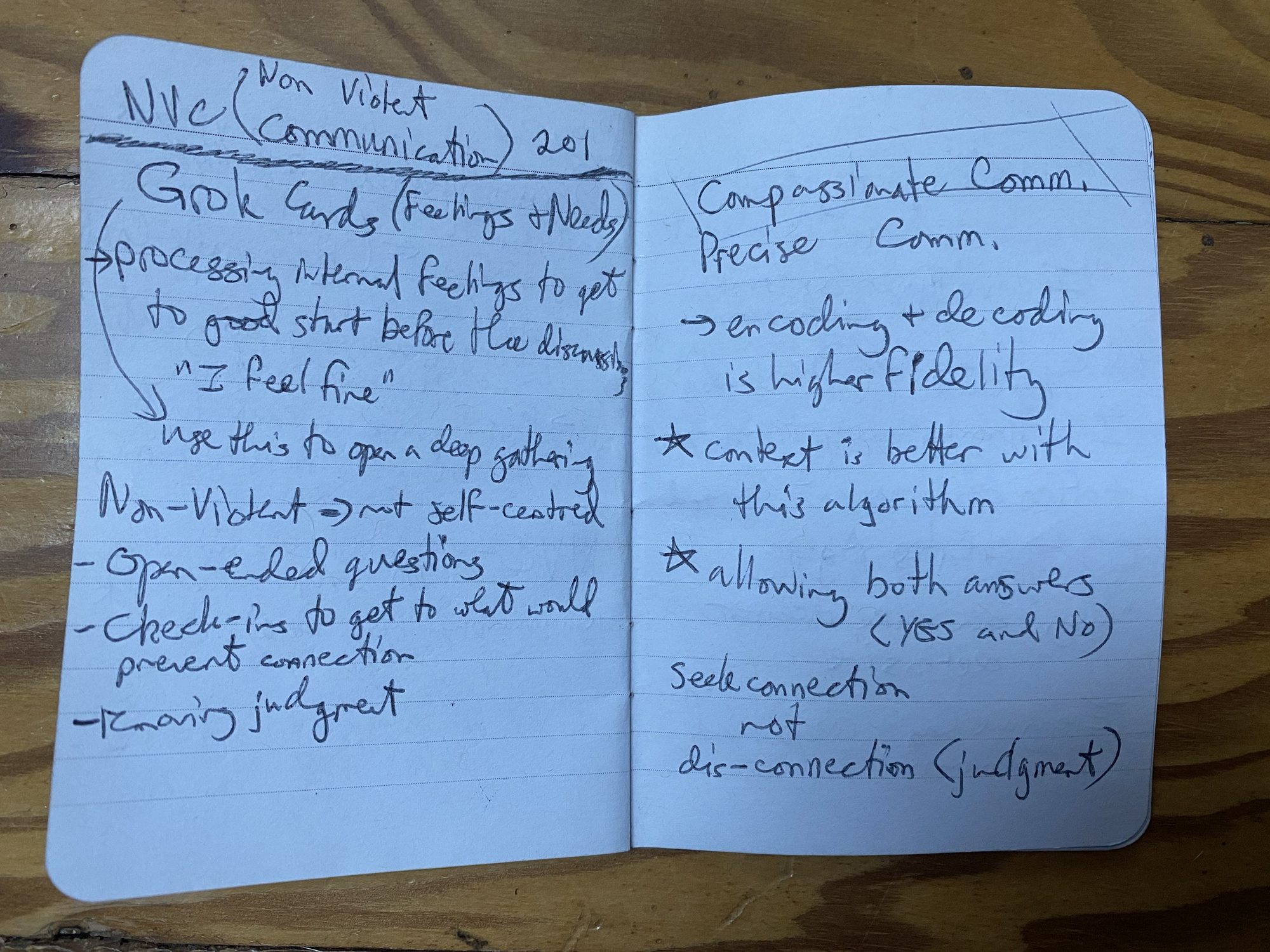
- The “non-violent” phrase is a poor translation – most folks prefer “Compassionate Communication” or even “Precise Communication”
- The most important thing is focusing on extinguishing judgment from any engagement on sensitive, controversial or divisive discussion
- open-ended questions = more “what is the situation” than “are we screwed?”
- seeking connection not differences = more “help me understand” than “why did that happen”
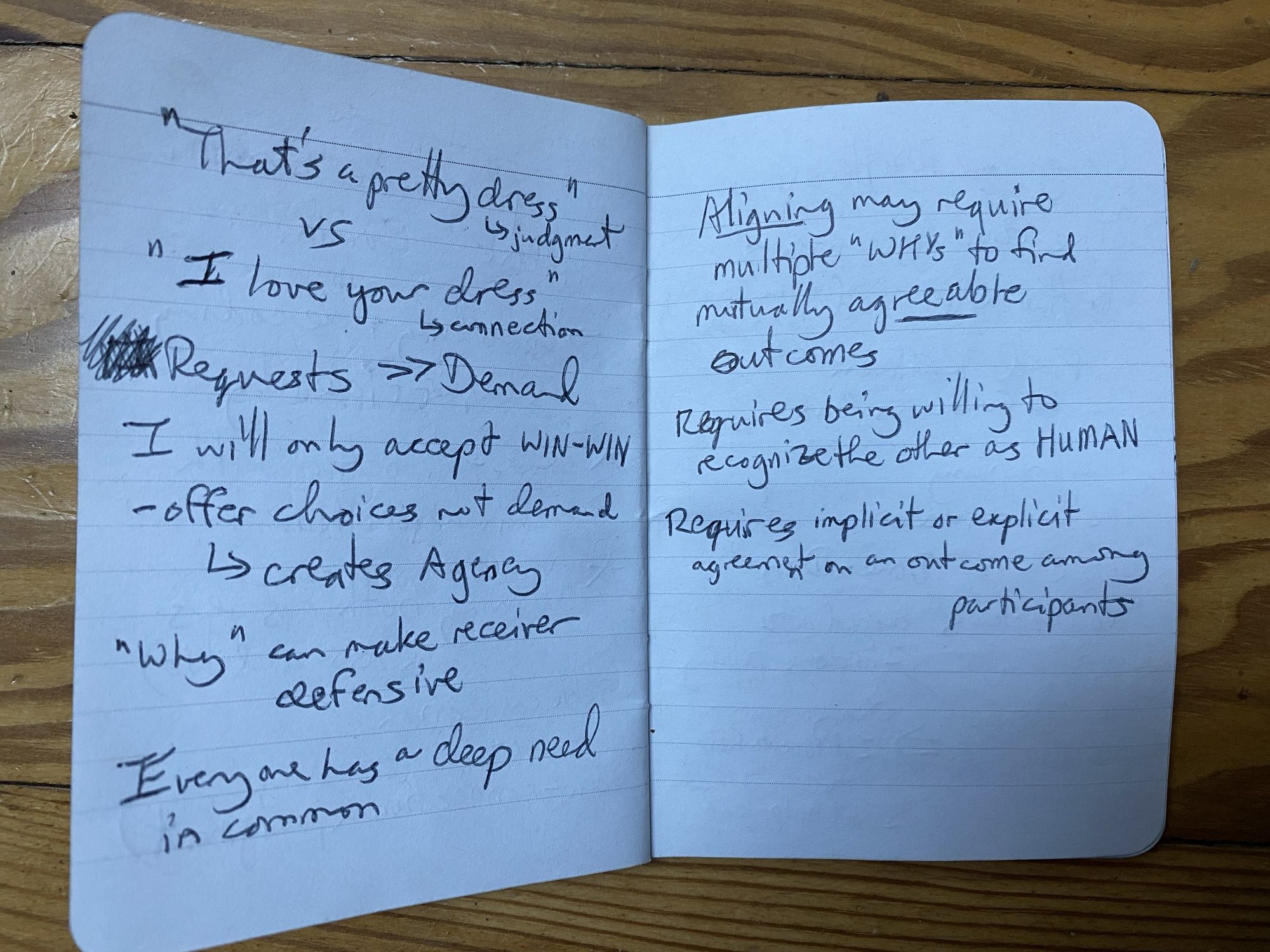
- removing judgment = more “I love your dress” than “that’s a pretty dress”
- The trick (on yourself, the practitioner) is cultivating a mindset of knowing that deep down, any two people have deep needs in common
- finding that win-win can require a significant emotional and ego-less investment, especially when we start out with an explicit disagreement
- “Why” questions will make the receiver defensive
- offering choices creates agency, allowing the receiver to spontaneously align
- requires being willing to recognize the receive as a human, not an opponent
- relies on both parties being willing to find an acceptable outcome rather than “agreeing to disagree”
My Personal Highlights
- People like me – with only a few minutes’ interaction with many folks, wrapping up AONW for me was like doing the receiving line at a family wedding. (hard to complain about it)
- I like people – and I was thanked more than once for making individuals feel welcome and included
- The spirit of Agile is unshakeable, but it’s going to have to dress up in a new costume to get traction in the post-Agile tech industry


 The rattled cough of a Hyper-Empathetic PM