Review: Jinx

Jinx
Jinx by Brian Michael Bendis
My rating: 4 of 5 stars

I picked this up at a book signing by Bendis last week. I haven’t read it in years and years, and I’ve read so much of Bendis since that time, I wasn’t sure how this would hold up.

As indie comics go, this is a winner. It’s amazing how much of Bendis’ talent for dialogue was already there in the beginning, and how well he tuned into that talent and focused on it. I’m also impressed by the art renderings – I totally forgot that Bendis used to do the art for his books, and I would’ve encouraged him to keep up this side of it (there’s much worse from non-writing artists out there, believe me), had his career not taken off so much as a writer.

The story is pretty thin – just a few set pieces in which to let his characters breathe – but there’s three more books’ worth of plot after this too, so it’s hard to judge the full merits of this fraction of the story arc (and I don’t remember the rest of the storyline so I won’t embarrass myself by guessing at it).

Most of all, this reminds me why I like Bendis’ work so much – he tunes in closely to how people act around each other, and what happens when unusually unlike personalities synthesize into something unlike either of them.

View all my reviews

Excommunicating myself from the Church of Alan Moore

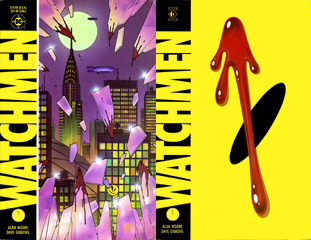
I’m coming out of the closet: I actively dislike Alan Moore’s “masterpieces”.

As a kid I drank up works like Watchmen (fresh! Post-modern capes!), but even then I secretly struggled to enjoy V for Vendetta – simply getting through it without losing any grip on a sense of a cohesive story was a challenge, and I worried there was something wrong with me.

As I returned to comics as an adult, I quickly revisited Moore (elder respected statesmen are supposed to be admired, revered and read, so I did my duty to god and the queen) and slogged through Watchmen (again), then Promethea (directionless softcore), Top Ten (interesting and enjoyable but probably due more to Gene Ha’s art) and then League of Extraordinary Gentlemen (curious, teasing with its layers of detail, but ultimately thinly veneered story – more like a series of staged scenes in which to scatter all his historical research).

I told myself I was enjoying it (I really needed to believe I saw what everyone else was talking about), but eventually I got to a point where I saw how many times I would put V on the pile of books but dig underneath it to something I was enjoying – and berating myself for not doing my “required reading”.  Then I realized that if I didn’t enjoy something *that* much, there’s actually no good reason why I *should* force myself to finish it.  So I didn’t.  And felt liberated for the epiphany.

My review on Goodreads of V for Vendetta is simply this: “Awful, stilted writing. Reads like an assigned book from a first-year Literature class – not something to be enjoyed but to be excruciatingly endured. Should be required reading for the Guantanamo set.”

My opinions on Alan Moore’s masterpieces started to turn when I started to read some dissent from fellow readers/reviewers on Goodreads and really crystallized when I started commenting in the recent “book club discussion” on Goodreads.

The more I think about Watchmen the book vs. Watchmen the movie, the more I realise that Moore’s greatest achievements are writing the wordy equivalent of a Where’s Waldo puzzle. His dialogue’s not bad and at least the plots aren’t telegraphed from page 1, but his characterisations are absurdly inhuman and the work is needlessly overwritten with irrelevant trivia.  It’s like an artist who has a bad case of OCD – he can’t put the damned brush down, even after he’s layered on so much paint that the original picture is completely inscrutable underneath the layers of random strokes and irrelevant tangents, that all look pretty but have destroyed anything worth rendering to the world.

Hiding your pretty storyline behind (or burying it under) details that don’t advance the story is a way of teasing the smarties in the audience and making making them feel smarter than “other readers”, but the conceit falls down once you realise that “other readers” don’t care to crack an encyclopaedia every page or two – we lose the rhythm of the plot (if there is one) in trying to figure out what that next metal trap is all about.

As a kid I loved how I could feel smarter than my peers while reading this kind of stuff (even though truthfully I only understood about 1/4 of the references and just imagined that there was weighty importance to the rest). Now, I find things like Watchmen, LoXG or that turgid thesis V just tiresome and laborious to slog through, especially when trying to ignore Moore’s desperate pleas to “look at how smart I am” and find the underlying story that’s still worth enjoying. Somehow the movies were able to emulate Moore’s staging and still find a way to *connect* with the moviegoer – but just barely, considering how slavish they were to nearly every page of layout and dialogue.

I feel at once brave and stupid for putting this out to the world – like I’m going to lose a number of people who would’ve otherwise tried to like me, but are put off because I just called their favourite baby ugly.  I can only offer that my standards have changed since I first started reading comics, and this no longer holds the line for most exciting works in comics for me. “At the time his work was amazing” is an historical conceit, but if that’s the best reason I can come up with to convince myself to like it, I’ll move onto something I just *naturally* enjoy today. There’s a wide world of books and tastes out there these days, and for me I’m glad to have more than Moore to choose from.

I still like Moore’s cleverness (despite my self-consciousness at why I like it), and what I don’t like about his work, many others do. We don’t have to agree on what’s best, nor would I enjoy the medium as much if there was no variety to choose from or be surprised by. I appreciate that others don’t agree with me, and in many cases I’m ready to understand something I’ve missed that others see. I’ve thought a lot about Moore’s work over the years and my opinions have evolved – but hasn’t entirely stagnated. Who knows? Maybe in another ten years I’ll see something there that isn’t apparent to me now, and I might be horribly embarrassed by these current opinions.

Review: S.H.I.E.L.D.: Architects of Forever

S.H.I.E.L.D.: Architects of Forever
S.H.I.E.L.D.: Architects of Forever by Jonathan Hickman
My rating: 5 of 5 stars

Fantastic ideas incorporated into this series. No one is investing more into re-imagining the Marvel Universe’s already well-established history, and boy is Hickman pouring real effort into this and the Secret Warriors. What with all the multiple-titles-per-month writing going on in Marvel these days, it’s a rare treat to get someone who sits down and thinks up more than appears on the page.

Weaver’s gorgeous artwork lavishly renders each panel, and he does some Big Scenery well.

This book for me demanded a careful read and a number of flips back and forth to make sense of all the details. Some may say this isn’t a good story or that they didn’t like it; for me this is exactly the kind of work I’ve been looking for, and I enjoyed the challenge, the surprises and the sheer force of imagination that this book brought to me. I borrowed this book from the library but I’m going out to buy it now, and I’ll put the next book on my wish list too. This deserves a place of honor among my most prized graphic novels, and I’ll happily re-read it just for the “better than petty men” inspiration.

View all my reviews

Review: The Other Side

The Other Side
The Other Side by Jason Aaron
My rating: 5 of 5 stars

Fascinating insights into two very different training & motivational approaches to mustering an army, and how it affects not only the individual actions of soldiers but also the outcome of the whole war.

Then the real slog hits – holy god is this hard to get through, unrelenting, painful, numbing stuff. I had to put it down about 2/3 the way through, take a break, read some funny stuff on the Internet, grab a snack. It was *that* hard for me to experience just how unrelentingly depressing, inhumane and soul-crushing the actual *experience* of fighting this war was for the boys on the ground.

Which makes this an all-star, kudos-earning, compelling storytelling effort on the part of the creators. When I’m that repulsed by the work, that means they did an incredible job reaching out from the pages and hitting me square in the emotive muscle.

View all my reviews

Review: Atomic Robo Vol. 3: Atomic Robo and the Shadow from Beyond Time

Atomic Robo Vol. 3: Atomic Robo and the Shadow from Beyond Time
Atomic Robo Vol. 3: Atomic Robo and the Shadow from Beyond Time by Brian Clevinger
My rating: 5 of 5 stars

Funny. Inventive. And the word "fresh" just keeps coming to me, even though my subconscious critic knows somehow all these stories are regurgitated. What Clevinger does with Lovecraft is just slightly insane and wonderful.

What he does with the later chapters are mind-blowing – combining insane scenes with an incredible fluency with science and science fiction. My brain actually *thinks* while reading this one, and wonders how real & bleeding edge some of these ideas really are. That happens so rarely and my intellectual standards in comics are so low, that this is a real gem.

View all my reviews

Review: 52: Vol. 4

52: Vol. 4
52: Vol. 4 by Geoff Johns
My rating: 4 of 5 stars

Summary: too bad about the never-say-die multiverse addiction at DC.

Dibny’s story? Awesome. Week 43 Day 1? Like a five-year-old wrote it.

Black Adam’s finale was not written by that five-year-old, and works much better.

And the build-up to the final climax? Cool. I felt like I participated in something actually pretty wondrous.

Too bad about bringing back the multiverse tho. Seems like DC is just addicted to its easy outs – the many, many variations on the same themes that make it so easy to explain away any discontinuities. Is DC just fundamentally lazy? Some describe it as "enabling creativity", but sometimes endless possibilities leave you without having to think hard, make choices or come up with elegant solutions.

DC is the brute force method of writing superhero stories. Just keep bashing on the same characters until one of the iterations finally comes out with something good.

I still liked the ending to 52, but it sure reminds me of how tiring these "restarts" get every time DC lets its writers paint them into a corner.

View all my reviews

Review: Final Crisis

Final Crisis
Final Crisis by Grant Morrison
My rating: 2 of 5 stars

Found the first few pages waaaaay too abstract to bother reading the rest. However it keeps coming back at me, and after realizing it was the linchpin between Batman RIP and Batman Reborn, I finally gave in.

This book feels like it’s all over the place – intentionally. That’s good for the DC geeks who know every minor character or sub-plot that gets a cameo here, but holy hell is it uninteresting to a DC amateur like me.

And frankly the hardest part of reading this book was trying to find and follow the narrative. I mean, there’s good mind-bending storytelling that Morrison is famous for, and then there’s just putting the plot points, characters and dialogue in a blender and simply churning until it’s an unrecognizable mass.

I’m sure if I read it again I’d get much more out of it, and maybe I will someday after I’ve spent a couple of years catching up on the DC universe (after five years I’ve focused so much on Marvel).

Until then I’m going to lament Morrison’s dubious decision to narrate most dialogue in that most insipid and stilted style that was popular back when comic books were still printed using droplet ink.

I totally felt duped into reading this when I saw how little airtime Batman and his “death” actually got. I didn’t know anything more about the continuity jump between Batman RIP and Batman Reborn than before I’d read this unholy mess.

View all my reviews