Apple versus everyone else: you really do get what you pay for

get-what-you-pay-forI used to work for Microsoft (7 years) and I only used PCs for about 20 years. Macs actually intimidated me. Then I got an iPhone.

I was also the family tech support, and every time I saw someone go Mac, I never heard from them again. The Windows folks, have me clean up their PC every year and are calling every few months with another infection, another driver problem, another hardware issue.

I’m now on my fourth iPhone, and got a Mac Mini a few years ago to hook up to the TV. Turns out I was intimidated for very little reason. I didn’t understand it all at once, but it was damned easy (in fact too easy – I kept expecting I’d have to do something fancy or painful to make it work the same way my PCs do).

I’ve grown to love my Apple stuff and grown to hate how much excess maintenance, worry and frustration I get from Windows PCs. Now I tell people that if they don’t want to worry for 5+ years and just have the sucker work and stay speedy, get an Apple product. If they want to mow the lawn, make the bed and change the oil every time they want to do something like browse the web or write a document, by all means get a Windows system and start saving for its replacement in a couple of years.

I still know more internals and tricks for working with my work PC, and I’ll never be a guru about my Apple products. And what I’ve learned is, I don’t need to be a guru to be happy and productive with them. It’s very freeing when you realise that the PC promise of ultimate flexibility really means constant maintenance and incompatibilities. You really do get what you pay for.

Adventures in Data Modeling: Entity Framework, Model First

sun breaks through cloudsWorking up a data model for a new systems architecture – been spending the last few months working in MS Word, whiteboards and sticky notes.  Feel like we’ve hit diminishing returns by looking at this in the abstract, so I figured I’d hack up an instance in MS SQL to see how much of this thinking stands up to reality.

I tracked down a few online resources to get me back into SQL (it’s been nearly a decade since I dug in deep) – two of note were:

After a day or so messing around with this, my valued conspirator Dale Cox mentioned Entity Framework to me:
http://msdn.microsoft.com/en-us/data/ee712907

And thus was the Bright Light of Truth shone upon my works.  For a guy like me who’s working out the business needs, transforming into Stories, and usually has a lot more to say about UX than about MVVM constructs or SQL queries, this is the perfect level for me to dig into next.  Entity Framework, Model First, using Visual Studio 2013?  I still wouldn’t pay thousands of $$$ for this tool, but here’s one way that it stays relevant for me.

See me speak at PDMA on UX for Product Managers (May 15th)

By the way, this Thursday I’ll be joining a panel of UX geeks talking at the Product Managers Association of Portland on “User Experience – What’s the Big Deal?”  I’m going in as the resident hybrid – UX geek and Product Owner, giving me the superpower to empathize with both halves of my brain when I do a crappy job for each of them. 🙂

Here’s a twist: I finally found a use for those “view this email in a browser”, because for some reason the PDMA doesn’t have a URL-able web page describing the logistics for this event:

http://us8.campaign-archive1.com/?u=f58583aa4a84e349713216644&id=464a80ea15&e=81024300cd

Hey, it’s a low-cost gathering of PO’s and PM’s getting together at the Lucky Lab for beer, food and some interesting conversation.  How bad could it be?

Image


See me speak at Devsigner Con

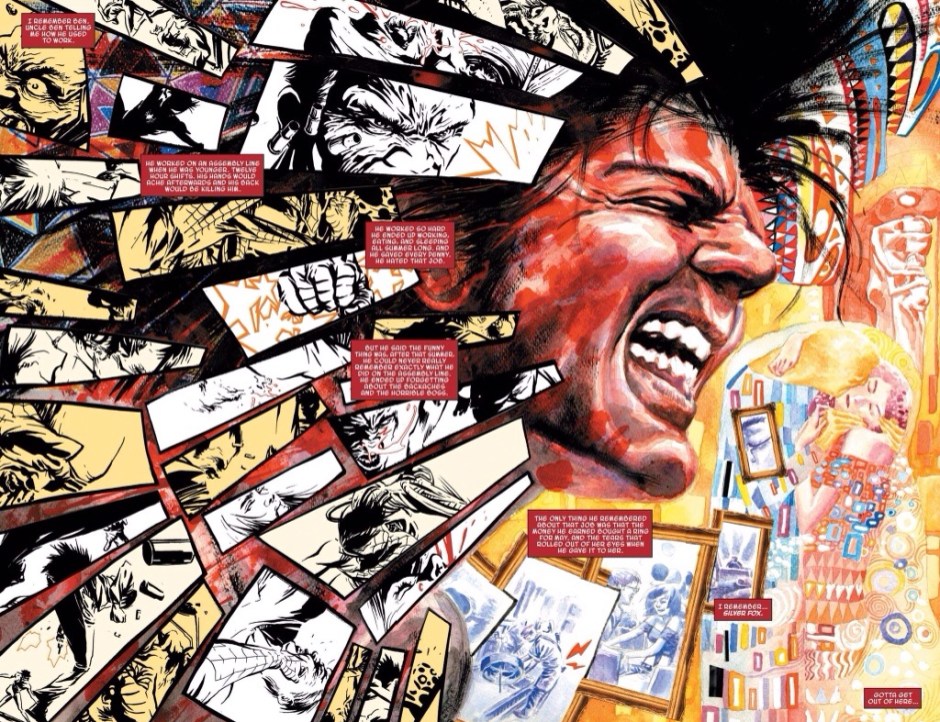
My talk “Great Storytelling UX in Comics” has been accepted at the Devsigner conference here in Portland, last week of May.  I’m excited to see more wild-eyed designers discover the amazing variety of ways that comics show us how to engage the user and immerse them more fully in the reading experience.

Have you seen my talk?  If not, this is an affordable opportunity to come see me in my Superman Kilt finery.

Devsigner Con, Portland, May 23-25th.

Image

Where’s Waldo, May edition

Upcoming speaking gig: I’ll be a co-panellist for the PDMA meetup “What’s the Big Deal About UX?”.  Talking to Product Managers and Product Owners about the challenges of integrating UX into our work – and I get to live the dream, because I wear both hats every day!

You’ll also find me at:

Where to find Mike, March-ish edition

Did you catch my CHIFOO talk last week? Packed house, enrapt audience, 100 full-colour, annotated comics pages to enlighten and entertain. I’m told I was on fire, and I’m thinking hard on whether and where to re deliver this gem (I’ve already accepted one invitation). Let me know if you’d be interested.

Great Storytelling UX in Modern Comics
Slightly altered photo  of me at the event

Th. March 13th: PDX Web & Design “Unconference” – I’m gonna see if they take the bait on my three-minute “tell me my tool chain sucks and how yours is better” interactive discussion. Best way to goad them into teaching me something. [Update: it worked like a charm. I learned a ton in five minutes and loved the generosity of the audience.]

Tu. March 25th: IxDA PDX “Interaction Design Conference Redux” – will I feel as awkward at this group as ever? Only time will tell.

Th. March 27th: PDMA “UX – What’s the Big Deal?” (Don’t ask me where to find this event – apparently I’ve fallen into a secret society, what with both their chapter page and the LinkedIn group locked behind members-only walls. I’ll gladly teach you the friggin handshake for a beer.)

Sa. Mar 29th: BarCamp Portland – maybe I’ll be there and maybe you will too, if they pull off the radically hacked plan and haven’t all committed suicide.

20140313-215449.jpg
Batman says

Let’s talk comics!

Ready? Set? Spidey-sense!

One week from now, I expect to see you smiling back at me from the audience of CHIFOO, hearing me regale you with great UX moments I’ve discovered in my favourite comic books.

Like this one:

20140226-185329.jpg

If that’s not quite enough to entice you out to the warrens of NW Portland, consider this: you will be one of a privileged few who get to see me sporting the masterpiece that is the Superman kilt handcrafted by my lovely partner Sara.

Hope to see you there!

Details here:
CHIFOO Storytelling Comics

Brain-wringing meetups and my upcoming CHIFOO talk on UX of Comics

I’m getting rather excited about my upcoming talk at CHIFOO on Great Storytelling UX in Modern Comic Books.  Over the next few weeks I’ll be finalizing the content and doing a few dry runs to smooth out the kinks and ensure I’m connecting with the audience at each page that I show during the presentation.  If you have the time and interest in seeing where this is headed, or helping out a guy make sure he’s making best use of the audience’s time, gimme a jangle.

Hawkblock

I’ve been out to a few meetups already this year (JavaScript Admirers, CHIFOO, STC) and helped out my poor dog who had a severe glaucoma attack and had to have an eye removed.  She’s bounced back amazingly and doesn’t seem to know that she’s not supposed to be missing an eye, which is a helluva lesson in staying present and adapting to change in this world. (Who knew my dog was a Buddhist?)

cyclops

Where will you find me in the next couple of weeks?

Further out I’m planning on BarCamp Portland 8 and ProductCamp Portland 2014.  Should be a brain-wringer.

How dangerous is the Tesla tablet-in-the-dash?

The more we see big flat glass touch panels show up in the dashboard of new cars, the less I am convinced that in-dash experience designers are ignoring in-your-lap tablet experience design principles and norms, and the more it looks like they’re just copying-and-pasting their tablet interaction models straight to the car.

I have a recent Prius and I have long since lost interest in fighting with that hard-to-control-at-a-glance UI.  This week I saw this article on the Tesla and felt like if even this pinnacle of beautiful design can’t seem to understand driver needs, it’s going to be a long time (and a lot of road scares and harm) before we ever tune the technology to actually assist and not detract from the driver’s main job.

http://fontsinuse.com/uses/3997/2013-tesla-model-s-dashboard-display

Tesla touchscreen

One colleague started discussion saying:

I love Tesla! The Model S is a gorgeous car. Finally, somebody designed an electric car that doesn’t look terrible. As for the dashboard, I think the UI is awesome. But I’m not sure it doesn’t impact the driver’s ability to pay attention to the road. I like the tactile sensation of knobs and buttons when I’m driving. I feel like I will have to pay much more attention to a fully touch dashboard, and thus pay less attention to the road.

I love the intent to question aging, anachronistic design paradigms, and to experiment with “start from scratch” designs. I too am concerned that this “iPad on your dash” hasn’t yet reached the balance between “fully flexible and context-dependent” and “easy for users to learn and fumble to a correct interaction without massive shifts in attention off the many critical attention foci that surround a moving vehicle every second”. It’s concerning that we’re literally performing these experiments on life-and-limb-threatening and increasingly attention-distracted roadways while the industry teaches itself new interaction models.

Without any physical affordances (e.g. edges/boundaries, permanent/predictable/easily-learnable targets) the 17-inch piece of glass is a nightmare of “at a glance, with little attention” interactions in a car for the driver. An interesting middle ground (which I hope we reach in the future) is a balance of bright, big, non-distracting display and haptic/physically-bounded touch targets [for touch interactions] and/or less-intrusive voice/eye-tracking/gesture-based input models.

For me, trying to touch those never-in-the-same-place-from-UI-to-UI buttons on my Prius’ touchscreen is just dangerous, frustrating and error-prone. At minimum, I’d like to see these “buttons” about 2-3 times their current size, so I can just grossly mash at them rather than have to precisely target them.

These kinds of finger-sized touch targets work find on a tablet where you have time to concentrate; very counterproductive in car UI [for the driver] where I’d expect sub-second glance-target-mash-resume interactions should be the interim goal (and “no loss of visual attention on the roadway” should be the final goal).

Colleague 2 said:

The future aviation dashboards are touch rich devices (thales avionics future cockpit won a design award).


But the industry is currently in a bit of a split. The modernization of the flight systems is helping the more mundane tasks like cruising or altitude climbing, but creating huge problems with takeoffs/descents/approaches/landings. Instead of knowing the 10 buttons you need to push/turn, you now need to remember what menu things are under. In an emergency, the manual systems have a better result. There aren’t any hidden features of the aircraft that you might have accidentally triggered.


There is also a school of thought that all this aircraft automation/simplification is creating pilots that don’t know how to fly well. So when an emergency hits. They are just as clueless as the passengers as to what to do.

I worry about this.  I sincerely hope that we never find drivers in the position of having to perform emergency interactions with their car’s controls through a flat-glass, multi-level-menu touch interface. It’s bad enough this has begun to creep into the airline industry; hopefully the car manufacturers are being more cognizant of the vehicle occupants’ lives (though I worry that the buried-deep-in-the-bowels-of-the-corporation’s-design-studios’ interface designers aren’t always made to recognize this as the primary goal of every surface of the vehicle).

At least in the case of an airplane at 30,000 feet, there’s a little time to recover from a significant mistake [boy I sure hope that’s true]; in the case of a car, I can’t call up Robert Hays from the back seat to take over when I screw up – no least because most screw-ups that threaten life and limb afford very low latency.

Image